
OBE · MAPPING
CLO–PLO Mapping
Every course should earn its place in the programme — visibly.
CLO → PLO
Course outcomes feed programme outcomes
Course-level
Where learning is designed
Assessment evidence
Where attainment is checked
Gap analysis
Where the programme improves
Overview
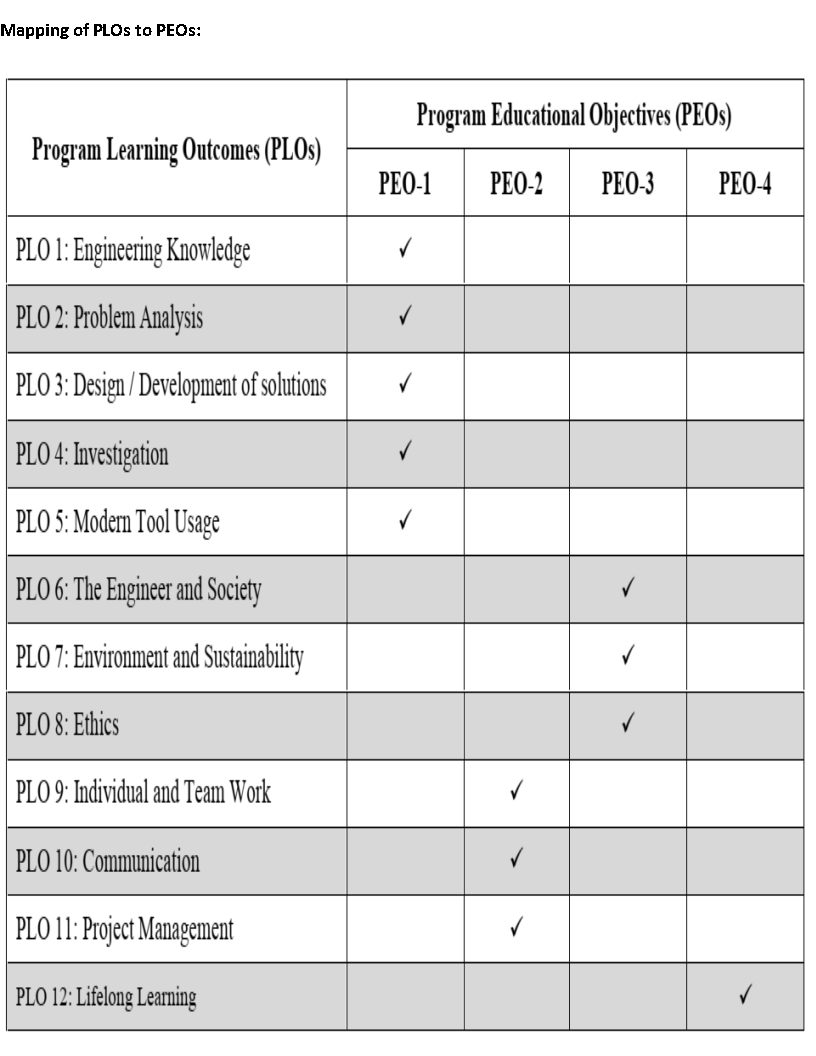
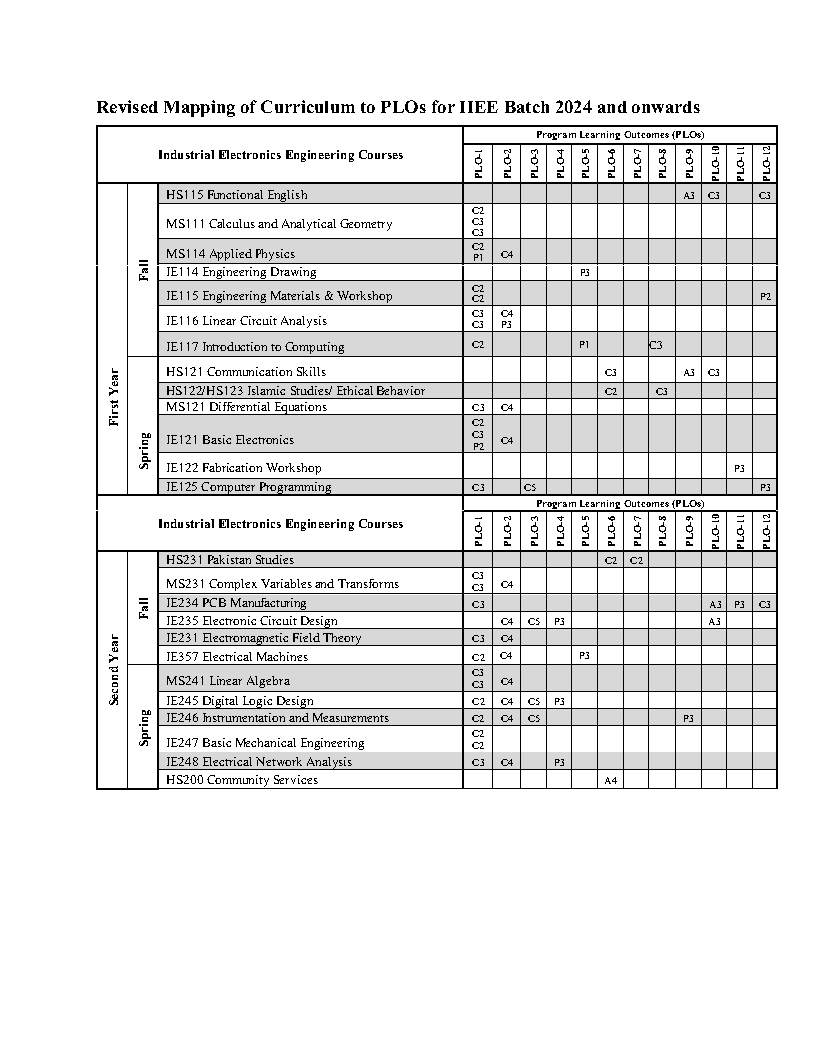
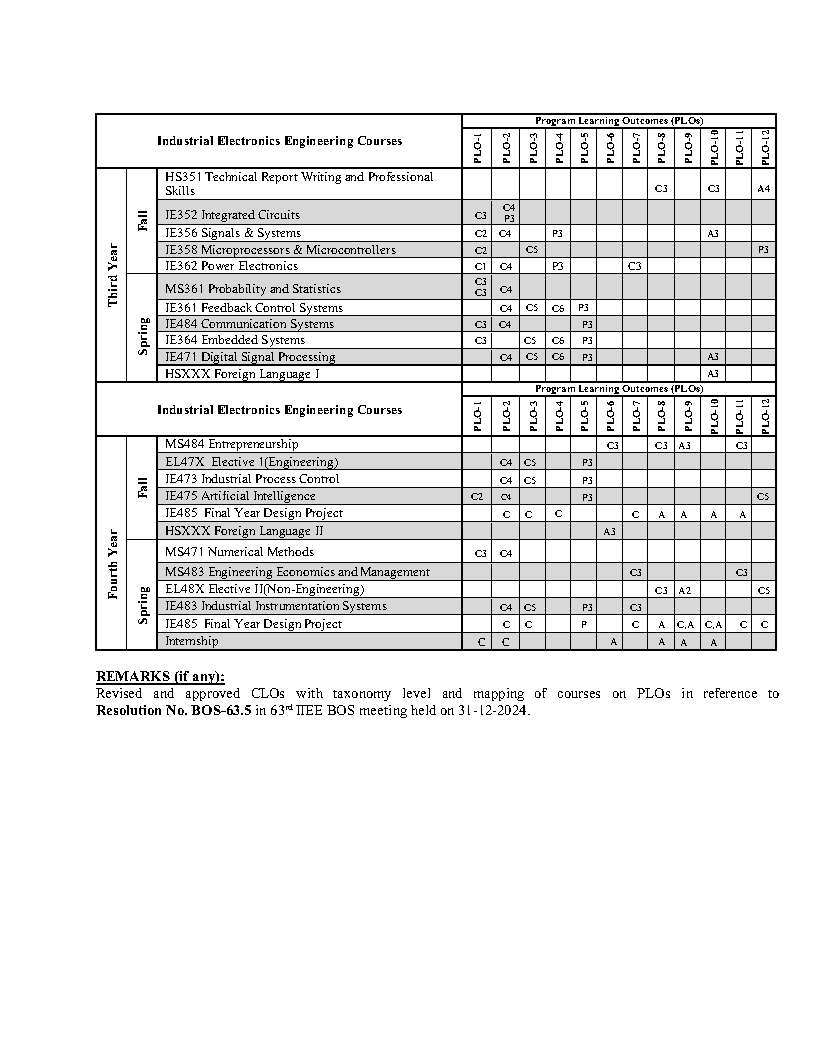
Mapping connects three levels: Course Learning Outcomes (CLOs), Programme Learning Outcomes (PLOs) and the Programme Educational Objectives (PEOs). It shows which courses develop which outcomes and where those outcomes are assessed.
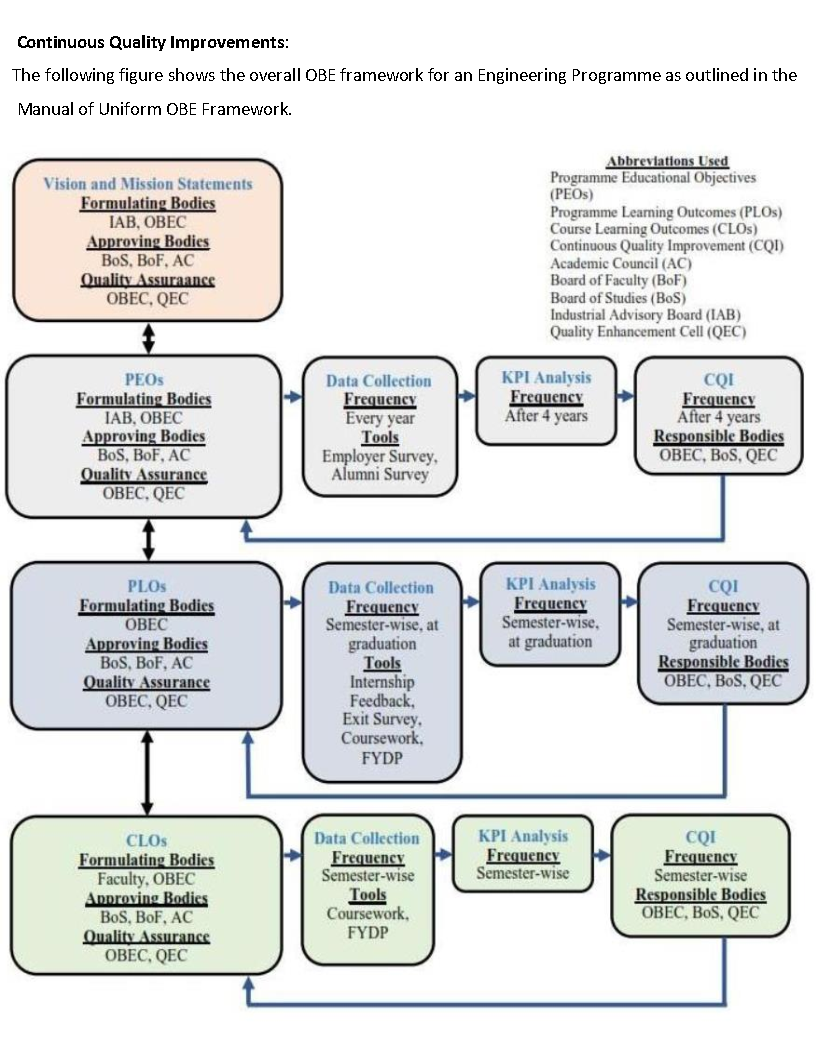
The official charts below are the reference. The explanation around them is a guide to reading the structure, not a replacement for the approved mapping.
How to read the mapping
- A CLO states what a student can do at the end of a course.
- A PLO states what a graduate can do at the end of the programme.
- A PEO states what a graduate should achieve in professional life.
- A mark or code shows where a course contributes to a PLO.
- Assessment evidence shows whether the outcome was actually attained.
- A gap appears when an outcome is claimed but not taught or assessed.
Official mapping charts
Why mapping matters
- It prevents a programme outcome from existing only on paper.
- It shows whether every PLO is taught and assessed somewhere.
- It helps faculty avoid duplication and gaps across courses.
- It gives accreditation reviewers a clear evidence trail.
- It connects course feedback to programme-level improvement.
Your part as a student
Read the CLOs in each course outline. They tell you what the assessments are trying to measure. When you receive feedback, connect it back to the CLO — that is how a grade becomes useful information.
Looking for a specific course mapping?
Ask the department for the approved course outline and the current mapping for your batch.
The official charts are reproduced for reference. The approved programme mapping and course outlines prevail.